
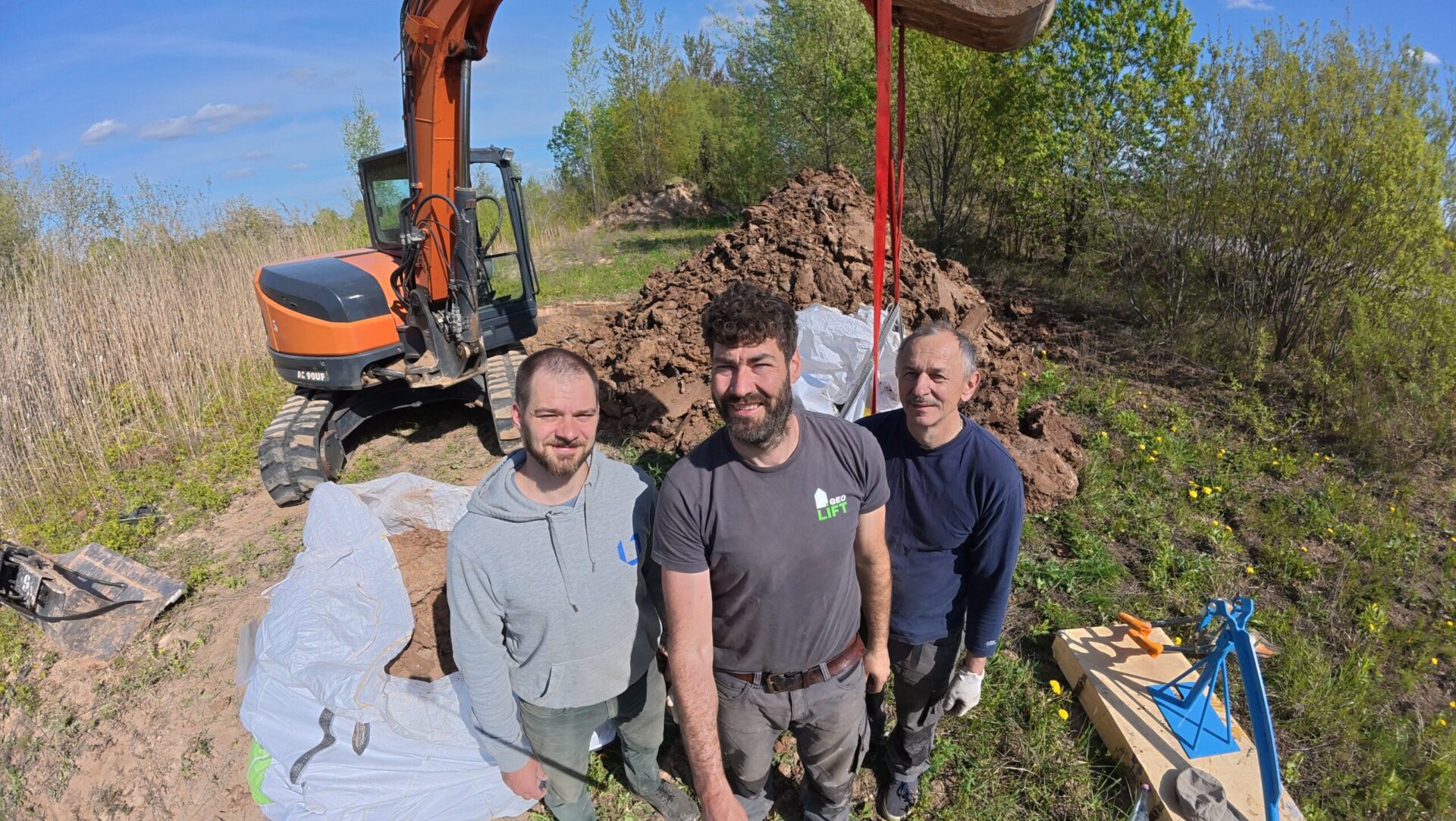
Can geopolymer injections become a reliable method for strengthening weak soils beneath load-bearing structures?
This question is being explored through the 2024–2026 scientific project “Development of Geopolymer Injections”, funded by the EU’s economic recovery and resilience facility NextGenerationEU.
The aim of the research is not only to assess how polyurethane resins affect soil locally, but also to understand how they change the structure and mechanical properties of the entire soil mass.
Why does this matter?
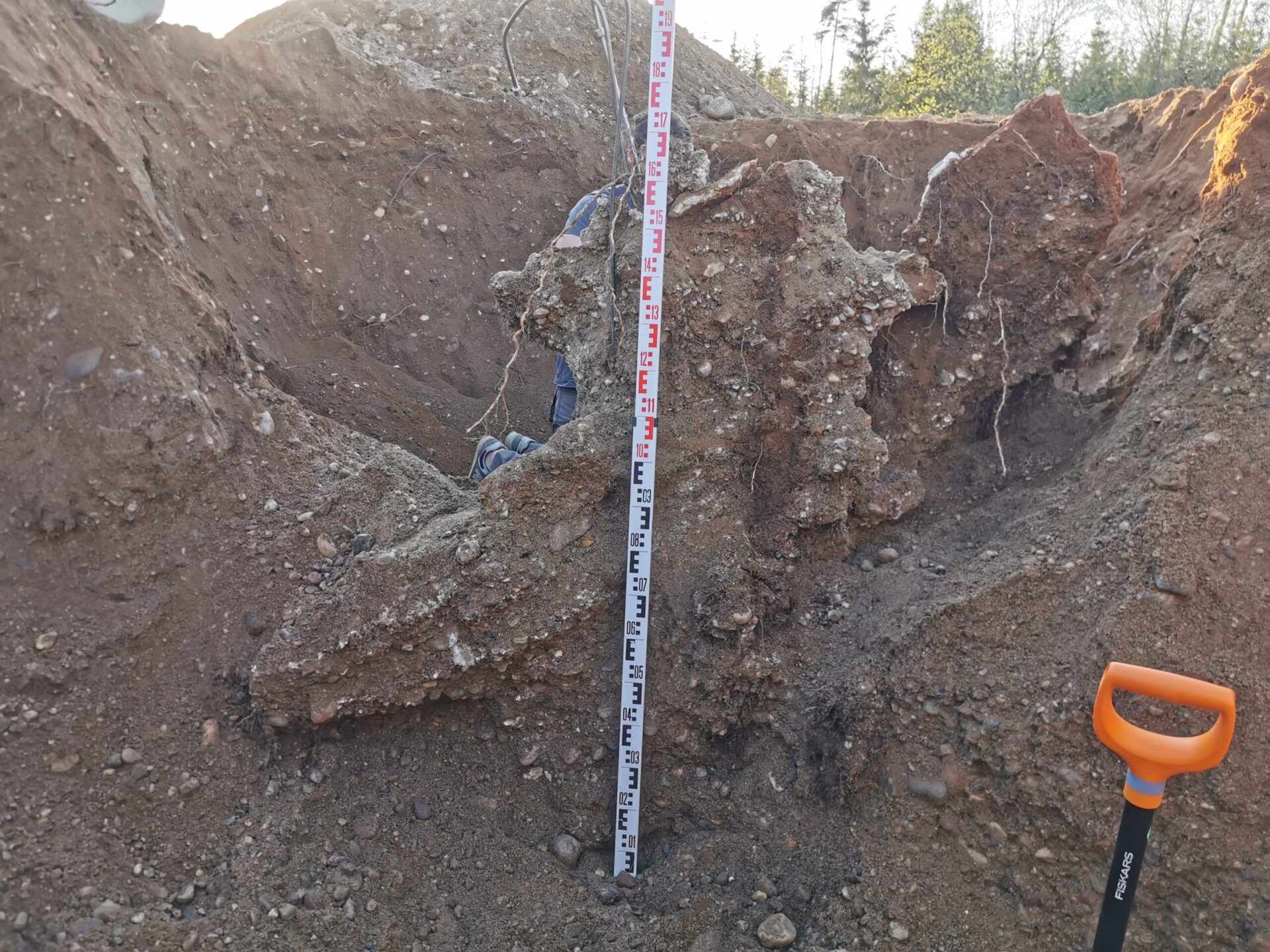
Geopolymer technology is based on injecting a specially formulated polyurethane resin directly into the ground. In practice, this technology is often associated with filling voids or lifting settled structures.
However, the scope of this project is broader: to evaluate whether geopolymers can be used as a scientifically grounded method for strengthening soils, increasing their bearing capacity, and developing accurate mathematical models for engineering calculations.
Research beyond the laboratory
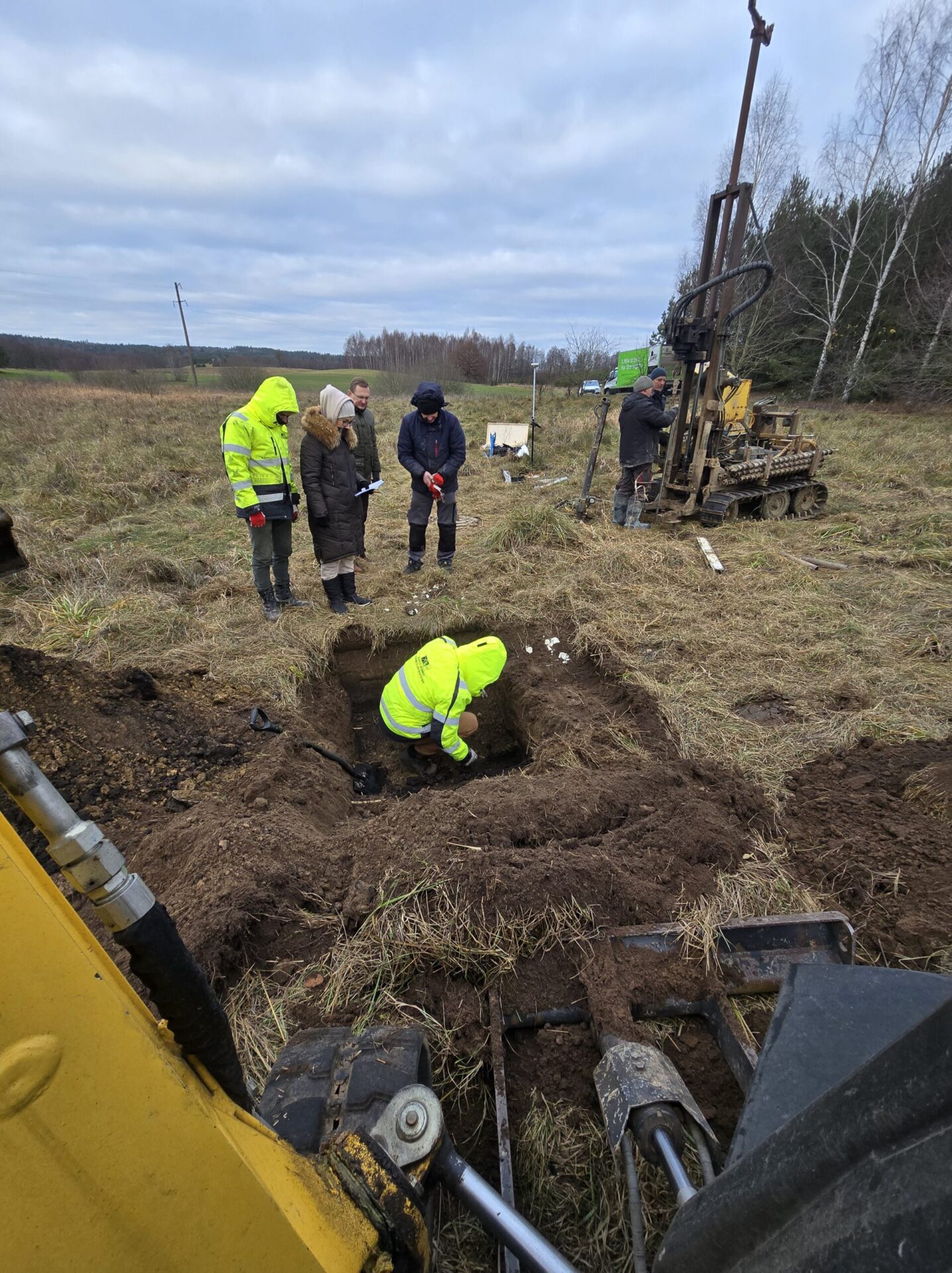
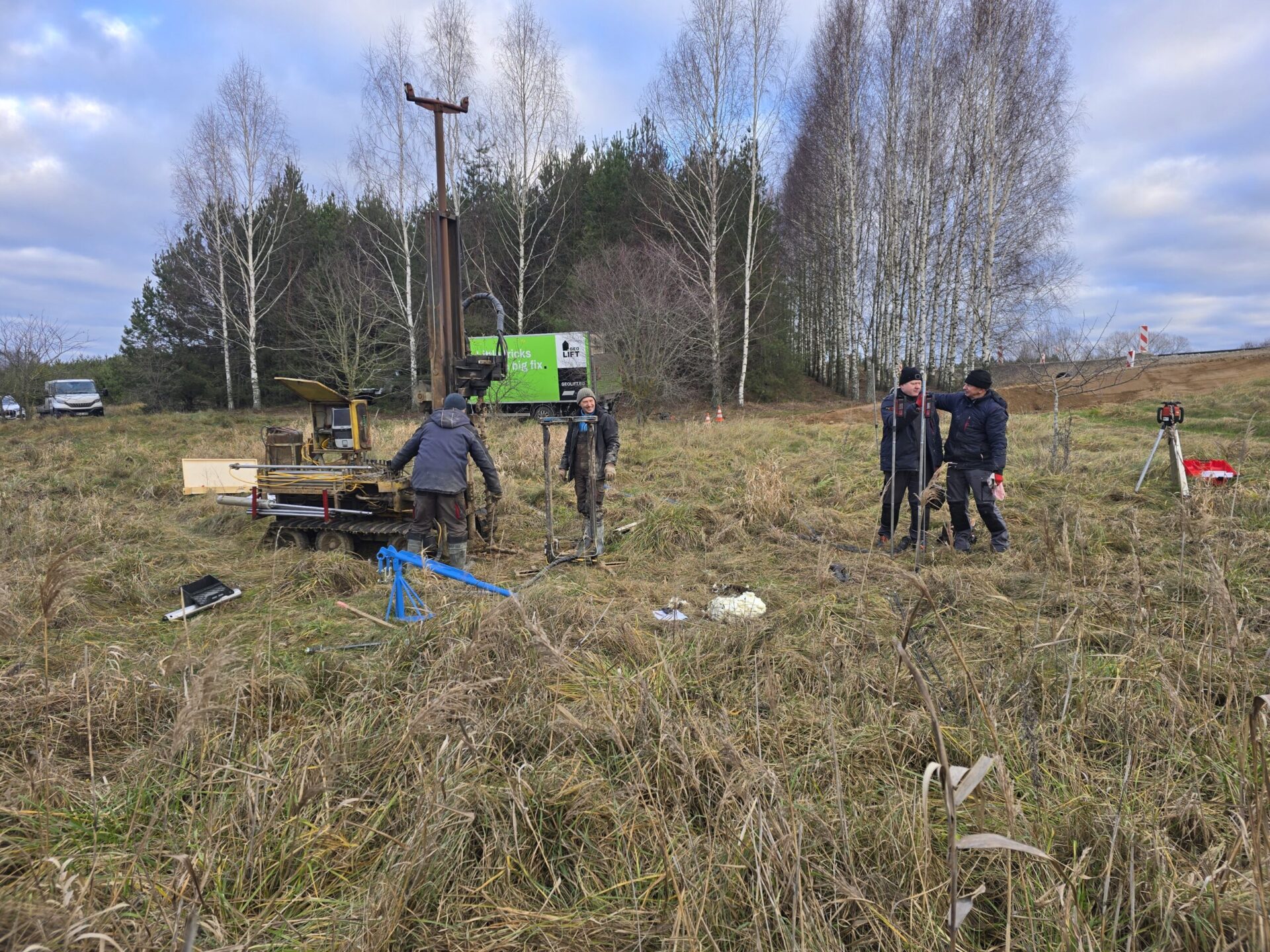
The testing programme was carried out across five different test sites in Lithuania: Telšiai, Klaipėda, Elektrėnai, Šakiai and Šiauliai districts. Six different soil types were examined, ranging from loose gravel to organic peat.
The first stage included initial boreholes and static cone penetration testing (CPT), which made it possible to determine the natural condition and initial properties of the soil. After the geopolymer injections, repeated CPT tests and additional investigations were carried out to compare changes at specific depths.
Laboratory results showed a clear strengthening effect
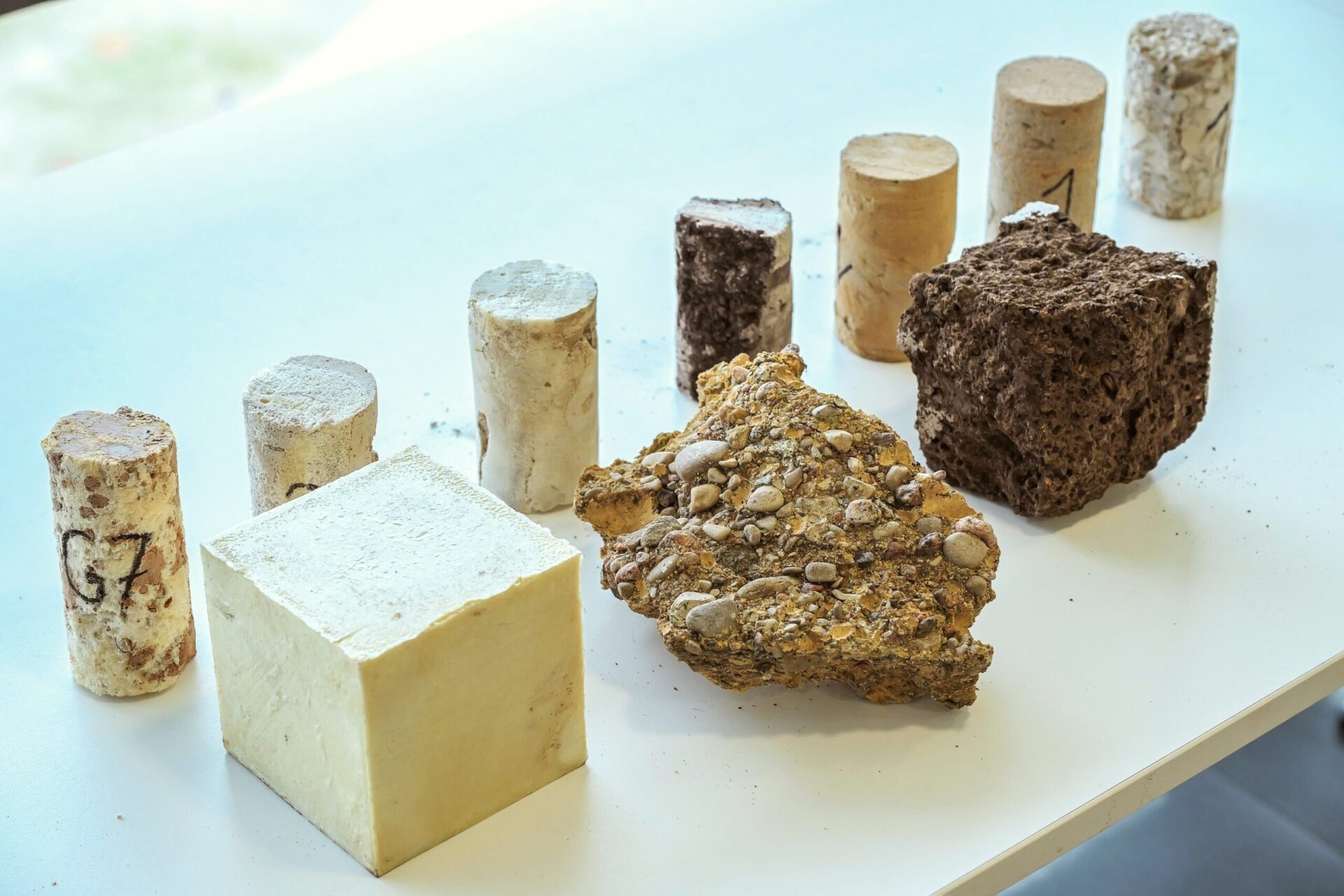
Laboratory tests carried out at VILNIUS TECH demonstrated a significant improvement in soil strength.
After injection, the strength of sandy clay increased approximately fourfold — from 0.073 MPa to 0.303 MPa. In sandy soil, compressive strength reached 6.661 MPa.
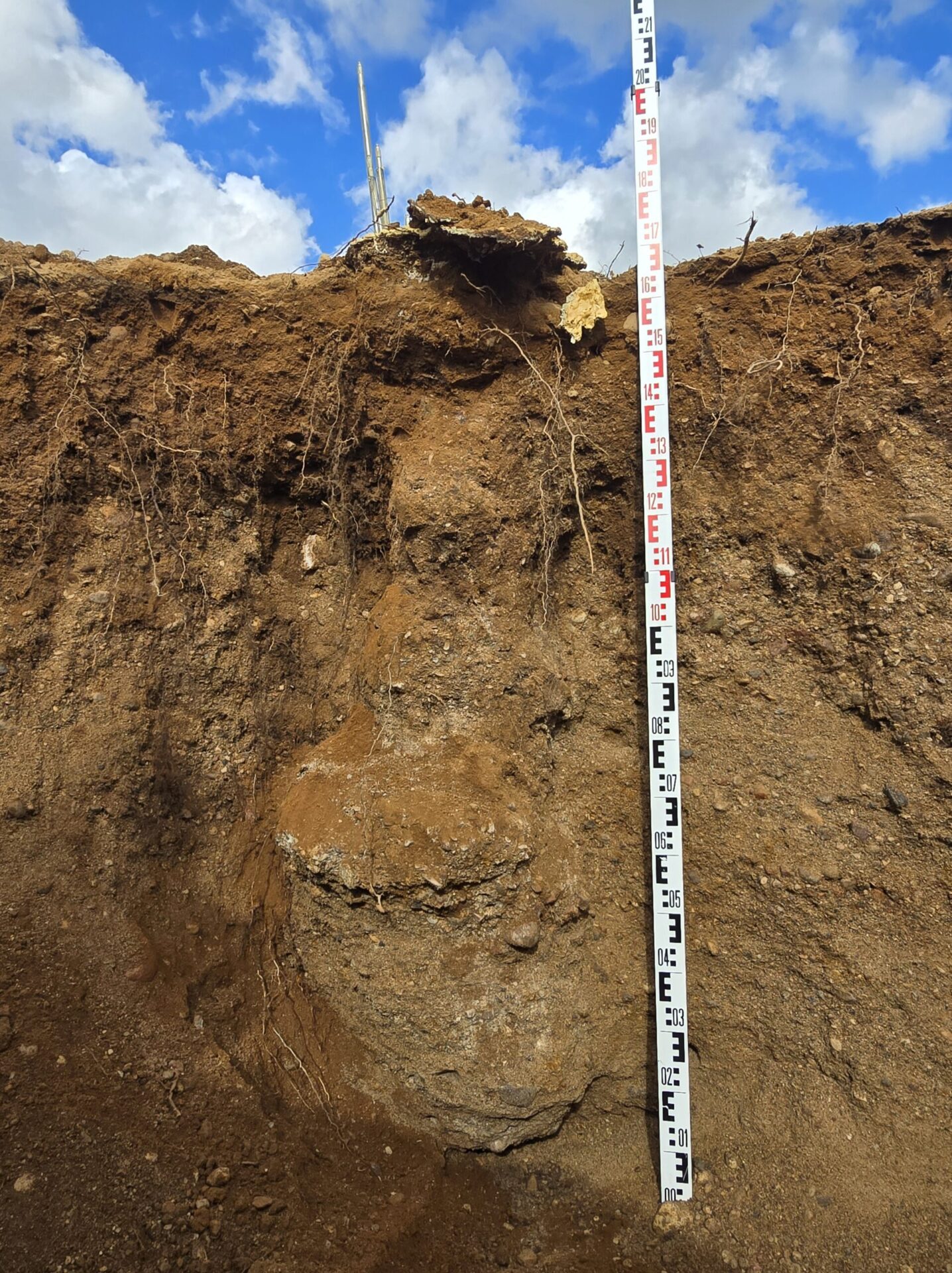
These results show that the geopolymer can form a rigid framework within the injected soil, transforming loose sand into a solid, stone-like mass. In terms of the achieved effect, the result is comparable to soil concrete.
Field testing revealed important nuances
In a real soil mass, the situation is more complex. Expansive geopolymer spreads through the ground in veins or fragments, similar to tree roots. As a result, its effect depends on the soil type, the location of the CPT probe, and the distribution of the injected material.
This means that CPT testing does not always directly capture the actual improvement. In some cases, compaction is recorded, or soil properties change according to the Robertson classification chart. In other cases, CPT may not detect a measurable change at all.
A significant breakthrough was achieved at the Telšiai test site, where a permeation injection test based on a developed mathematical model and research programme succeeded on the first attempt.
The key conclusion
Geopolymer injections are not a universal “quick fix”. They are an engineering method that requires geotechnical investigation, laboratory testing, calculations in accordance with applicable standards, and appropriate quality control.
Before selecting and applying this solution, it is essential to assess the soil properties, the type of structure, sensitivity to deformation, acting loads, and the interaction between the soil and the structure.
The research confirms an important direction: geopolymer injections can be an effective way to stabilise weak soils, strengthen foundations, and increase the bearing capacity of existing structures — when the technology is applied as a scientifically grounded engineering method, rather than based on practical intuition alone.
Source: this text is based on the Lithuanian-language article “Ką apie geopolimerų injekcijas į gruntą atskleidė moksliniai tyrimai?”, published by the Lithuanian construction news outlet Statybų naujienos: https://www.statybunaujienos.lt/index.php?page=naujienos&view=naujiena&naujiena_id=26360