
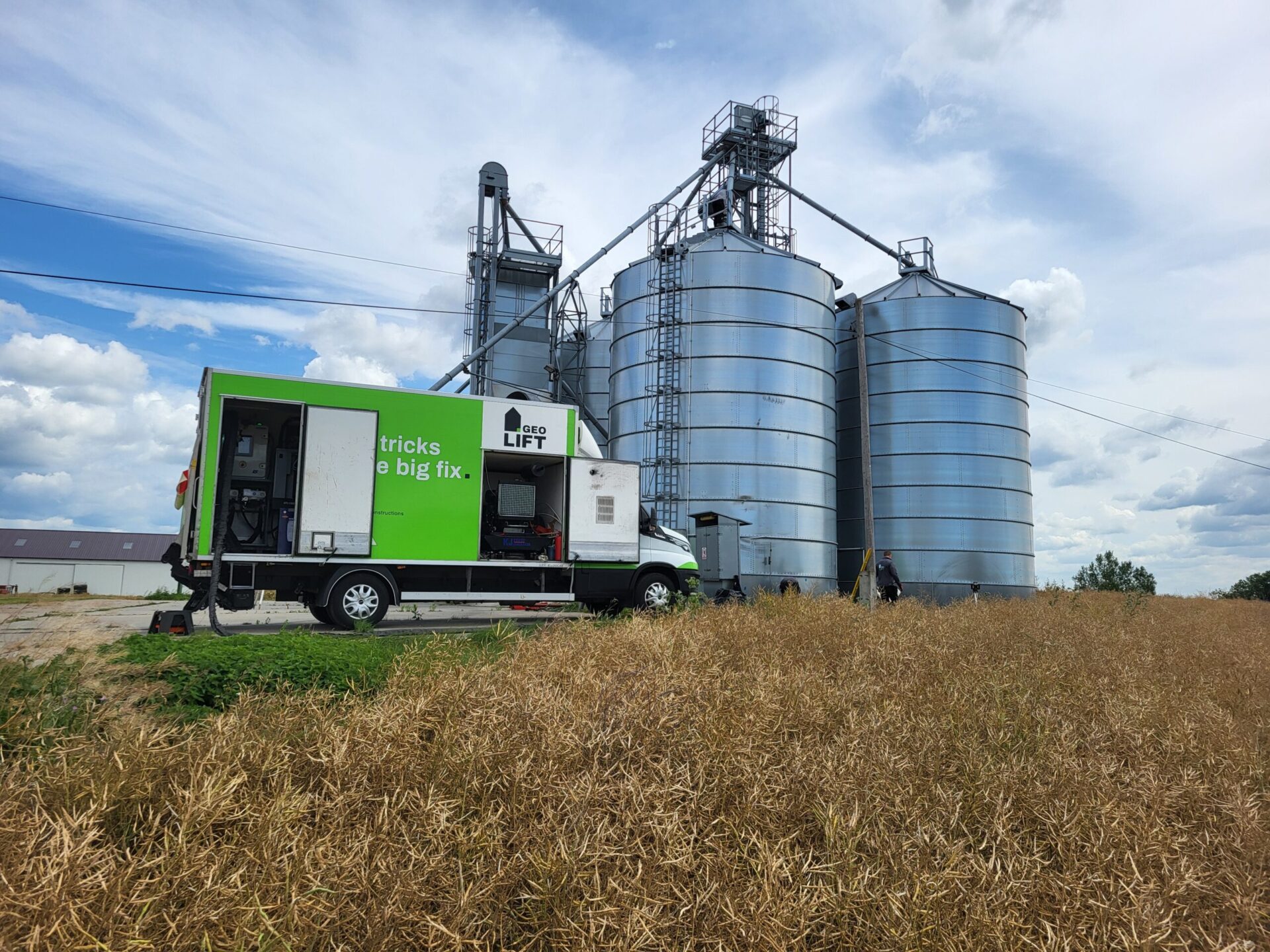
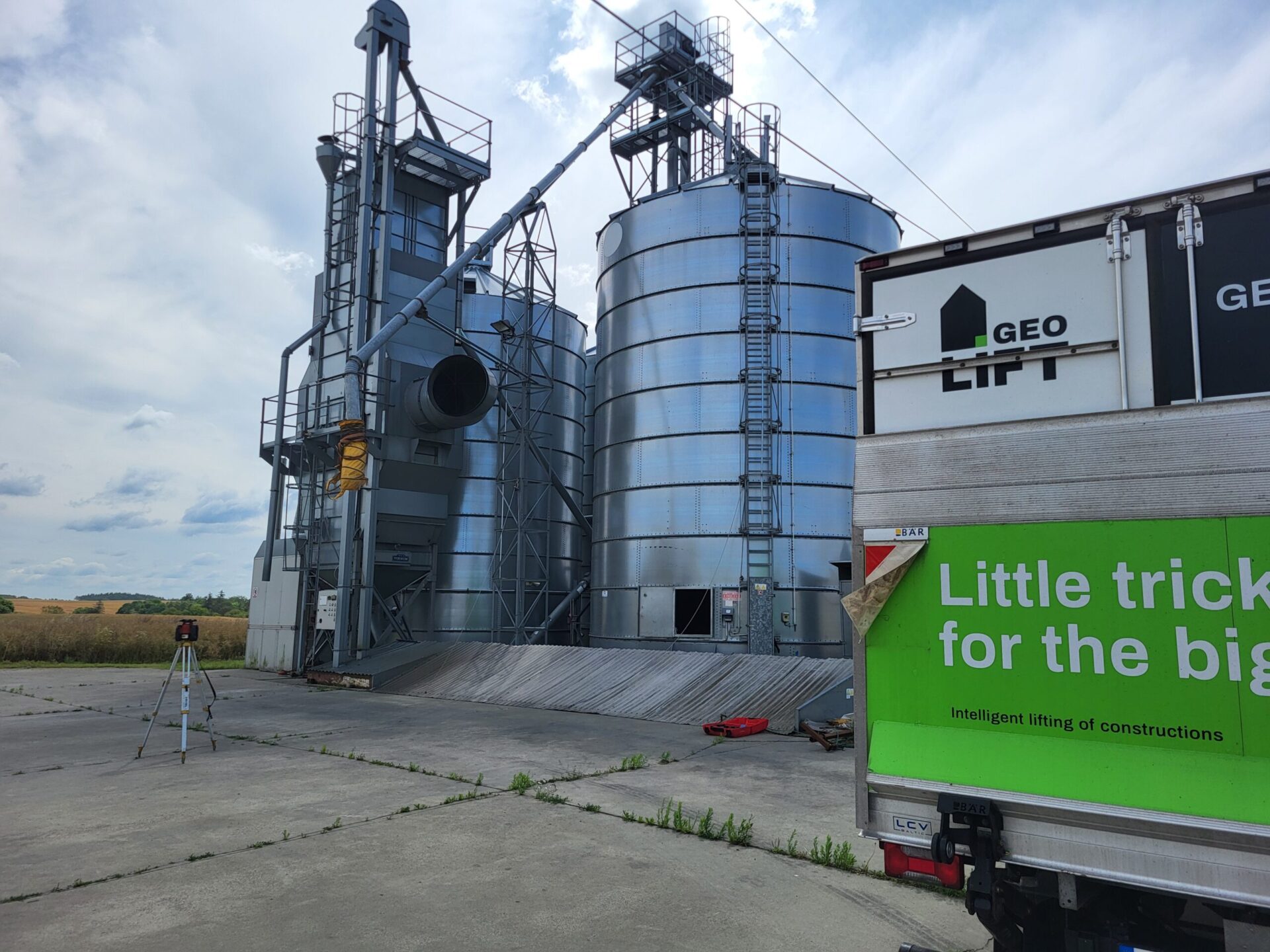
GEOLIFT stabilises agricultural structures affected by settlement, weak ground or voids beneath floors and foundations. Using controlled geopolymer injection, we support silos, tanks, loading areas and farm buildings with minimal excavation, downtime or disruption to daily operations.
Common problems in agricultural facilities
Agricultural structures are often built on large floor areas, shallow foundations or load-bearing zones that must withstand heavy equipment, stored materials and seasonal operating pressure. If the supporting ground was not sufficiently compacted or loses bearing capacity over time, settlement can affect safety, alignment and daily use.
The most common issues include:
- Settlement or tilting of grain silos and tanks caused by uneven bearing capacity or soil consolidation
- Voids and loss of support beneath floors or foundations caused by erosion, water infiltration or organic soils
- Cracked or uneven loading aprons affecting safe machinery and vehicle movement
- Structural stress on steel silos leading to misalignment, increased wear and operational risks
If left unaddressed, these problems can lead to structural damage, safety hazards and costly downtime during harvesting, loading or storage periods.
GEOLIFT process
Site assessment and investigation
- GEOLIFT carries out a detailed survey of the structure, foundation type and surrounding ground conditions. This includes evaluating load paths, settlement patterns and possible moisture-related issues.
Engineering analysis
- Engineers determine whether the problem is caused by weak soil layers, voids, insufficient compaction or long-term consolidation. Each agricultural structure is assessed individually because load conditions and operational requirements vary.
Selection of the right solution
- Once the cause is understood, GEOLIFT defines the most suitable engineered solution using appropriate ground improvement materials and controlled injection methods.
Solutions
Depending on the structural and ground conditions, GEOLIFT applies:
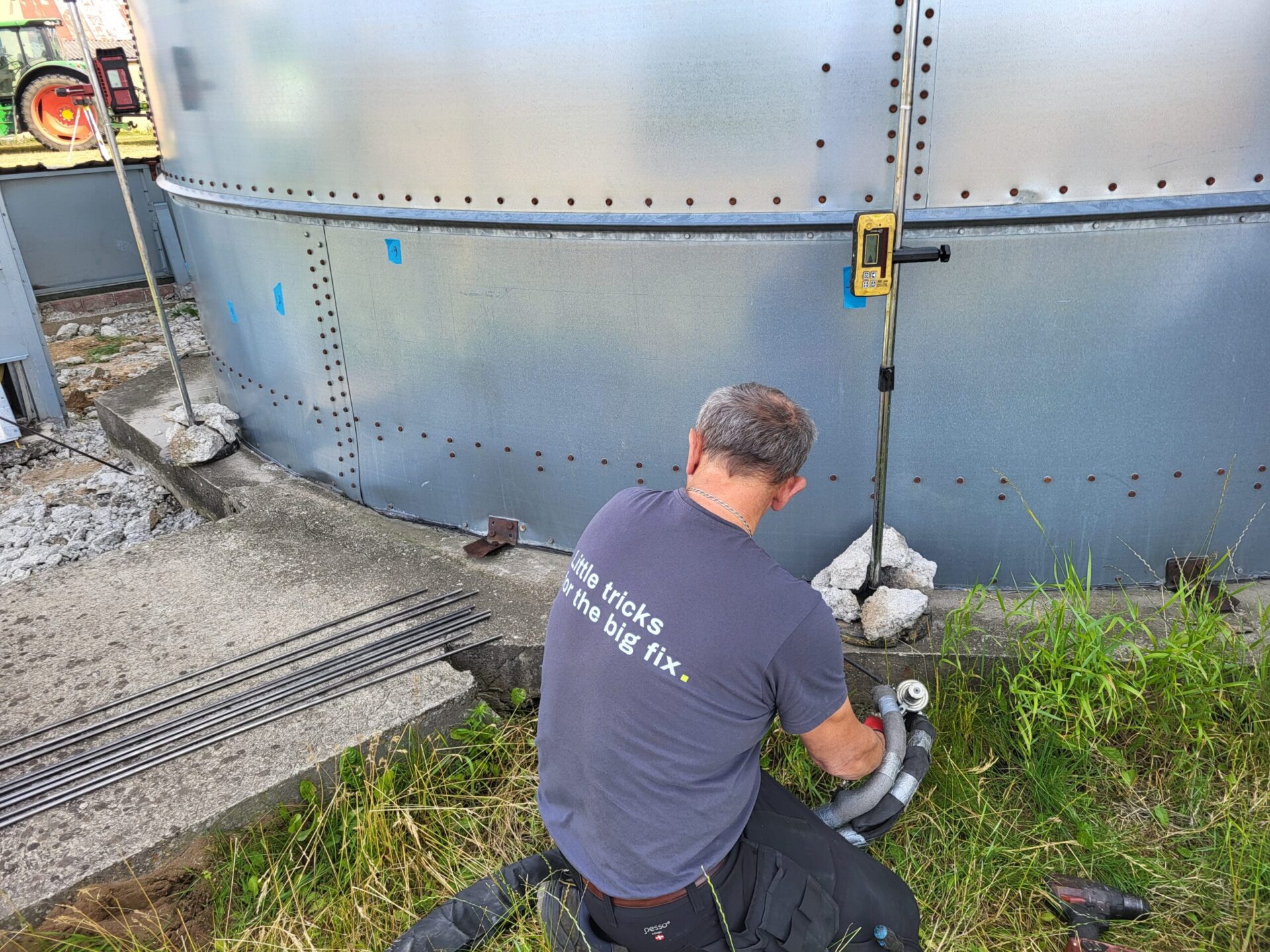
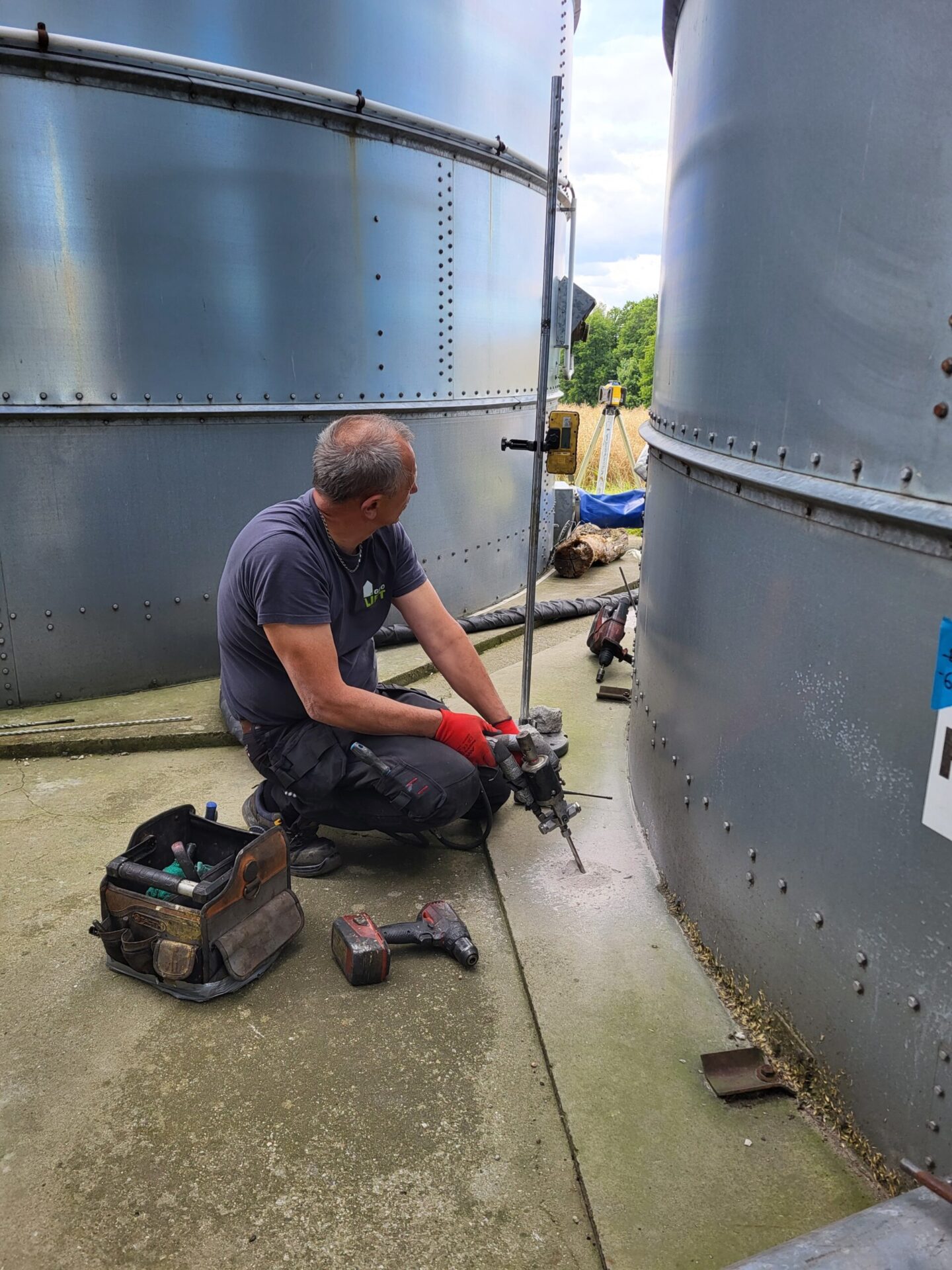
- Soil stabilisation beneath foundations and floors — expanding geopolymer materials are injected into the ground to improve soil strength, increase bearing capacity and fill voids.
- Controlled lifting and re-levelling of structures — where suitable, grain tanks, silos or settled floor areas can be lifted with controlled precision while managing stress on the structure.
- Rapid return to service — injected materials cure quickly, allowing agricultural operations to resume with minimal interruption.
This non-invasive process avoids major excavation, heavy reconstruction and dismantling of existing structures — an important advantage in active farm environments.
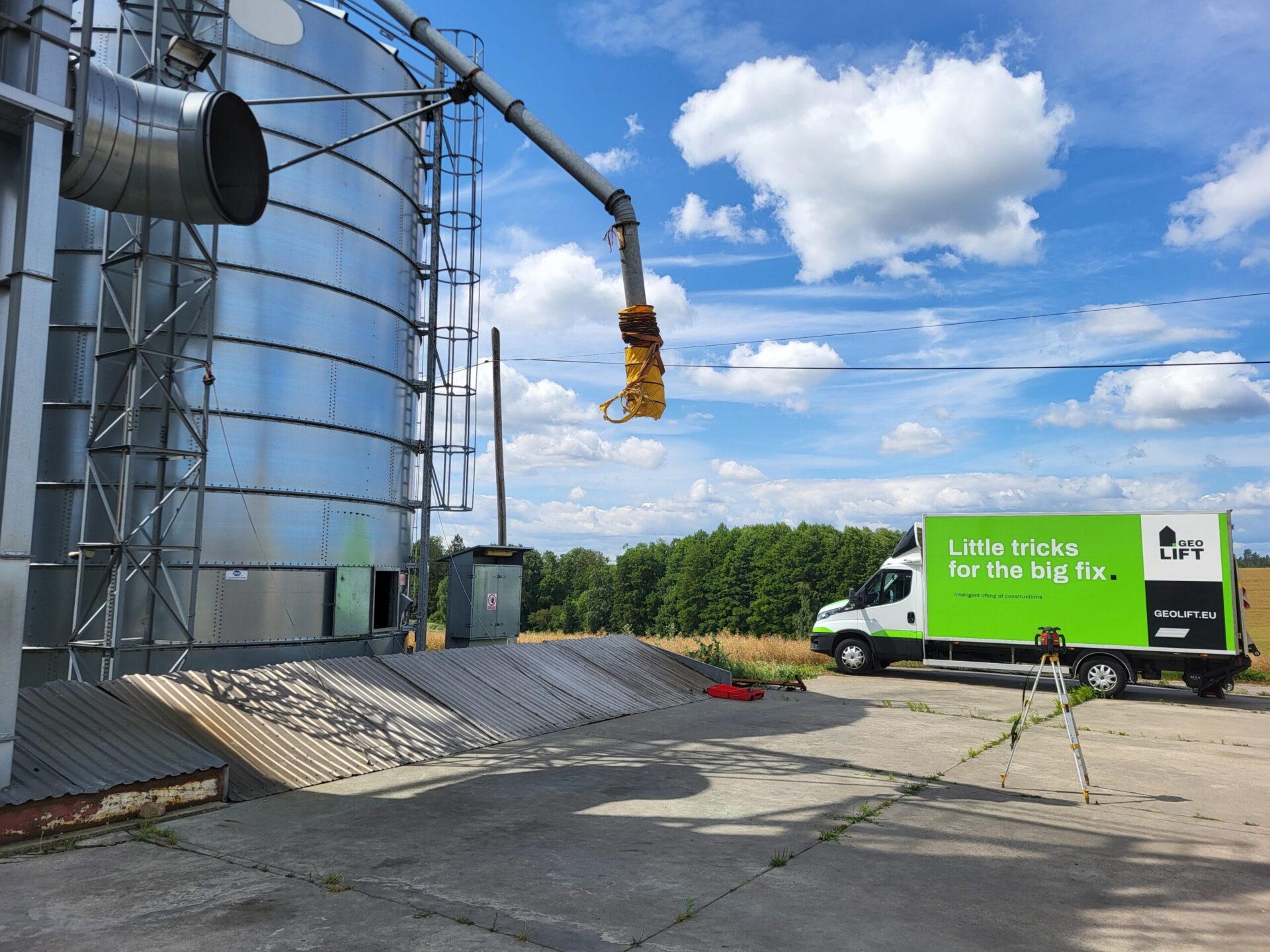
Benefits for agricultural structures
- Extended service life of silos, tanks and farm structures
- Improved safety and operational reliability
- Reduced risk of recurring settlement
- Lower maintenance and repair costs
- Minimal disruption during installation
Process
From site assessment to agricultural structure stabilisation
Every agricultural project starts with a technical assessment of settlement, loads, soil conditions and operational constraints. GEOLIFT then defines the injection strategy and carries out controlled stabilisation works to restore support with minimal disruption to farm operations.
-
1
Site assessment
We review visible settlement, structure type, loads, ground conditions and access constraints. -
2
Stabilisation plan and estimate
We define the injection strategy, expected outcome, scope and project cost. -
3
Stabilisation and lifting works
Controlled geopolymer injections are carried out to fill voids, strengthen weak ground and improve structural support.
Designed to minimise downtime during harvesting, loading and storage operations.
Request an agricultural structure assessment
"*" indicates required fields