
Industrial and manufacturing floors operate under constant heavy loads, vibration and strict tolerance requirements. GEOLIFT stabilises weak ground beneath floors and foundations using controlled geopolymer injection, helping reduce settlement, improve support and minimise disruption to production.
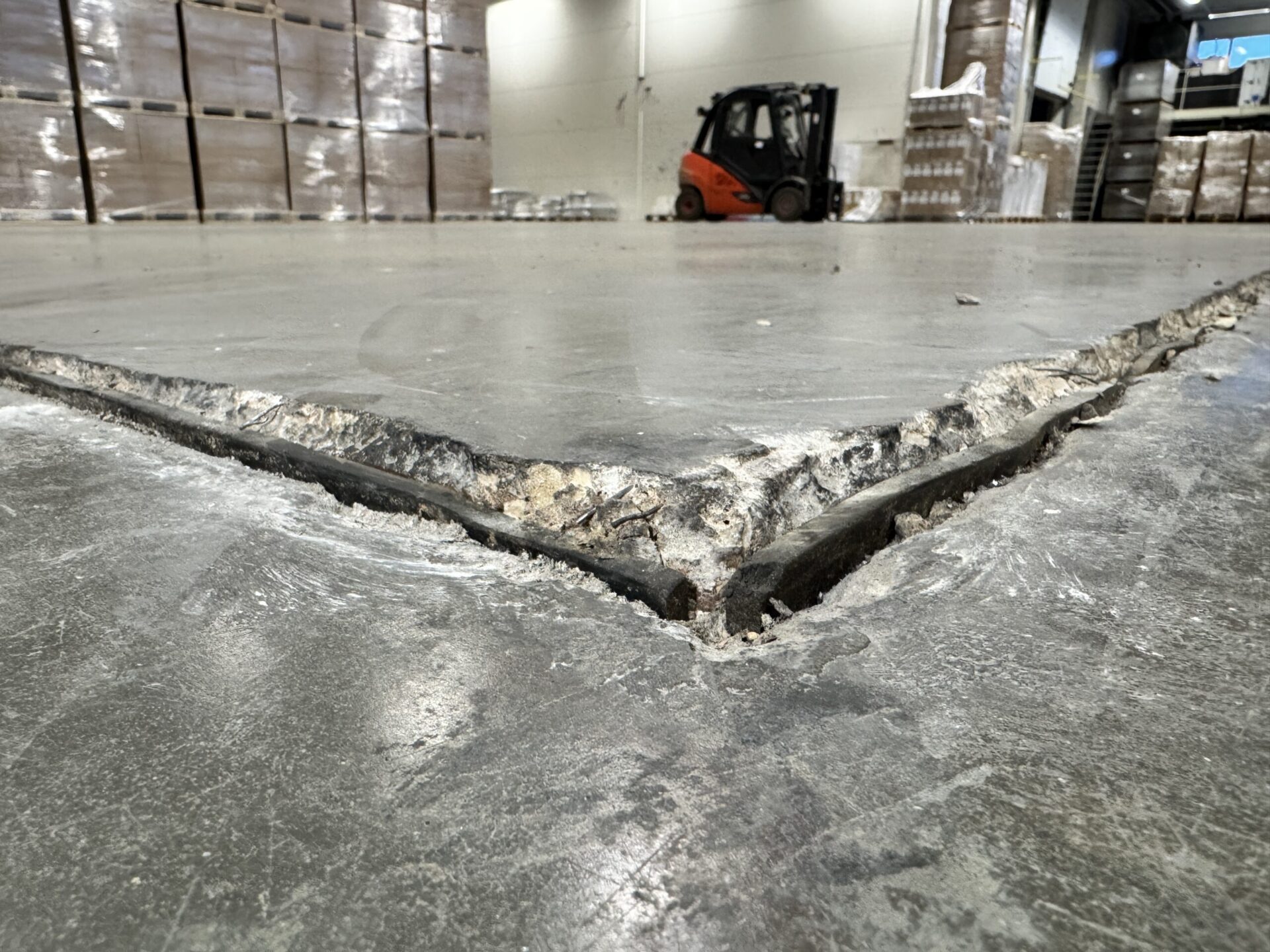
Why industrial floors fail
Industrial floors are designed to perform within strict tolerances. When the supporting ground loses bearing capacity, the impact goes beyond visible cracks. It can affect machinery alignment, vibration levels, floor flatness, worker safety and operational continuity.
Before any repair is planned, it is essential to understand why the ground has weakened and whether settlement is still progressing.
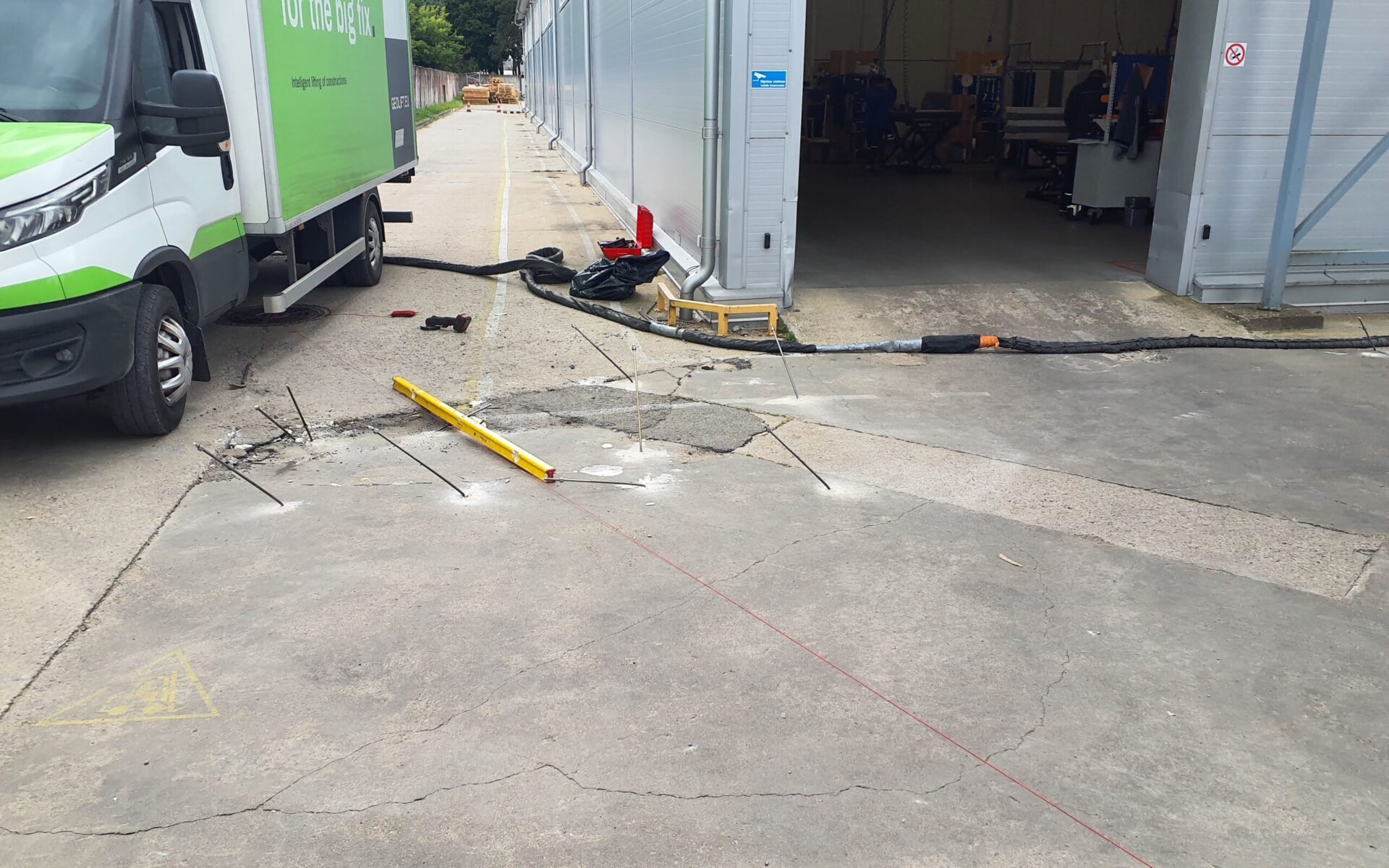
Typical causes
- Insufficiently compacted subsoil or backfill beneath floors
- Weak or compressible soil layers, such as peat, silt, loose sand or soft clay
- Long-term vibration from heavy machinery, conveyors, presses and automated systems
- Point loads that exceed the original design assumptions after equipment upgrades
- Water ingress, leaking process lines or drainage failures that reduce bearing capacity
- Thermal cycles and dynamic loading that gradually reduce soil stiffness
These conditions can lead to settlement, floor deflection, cracking, joint failure, rocking floor sections and loss of machine accuracy — all of which can affect production quality and worker safety.
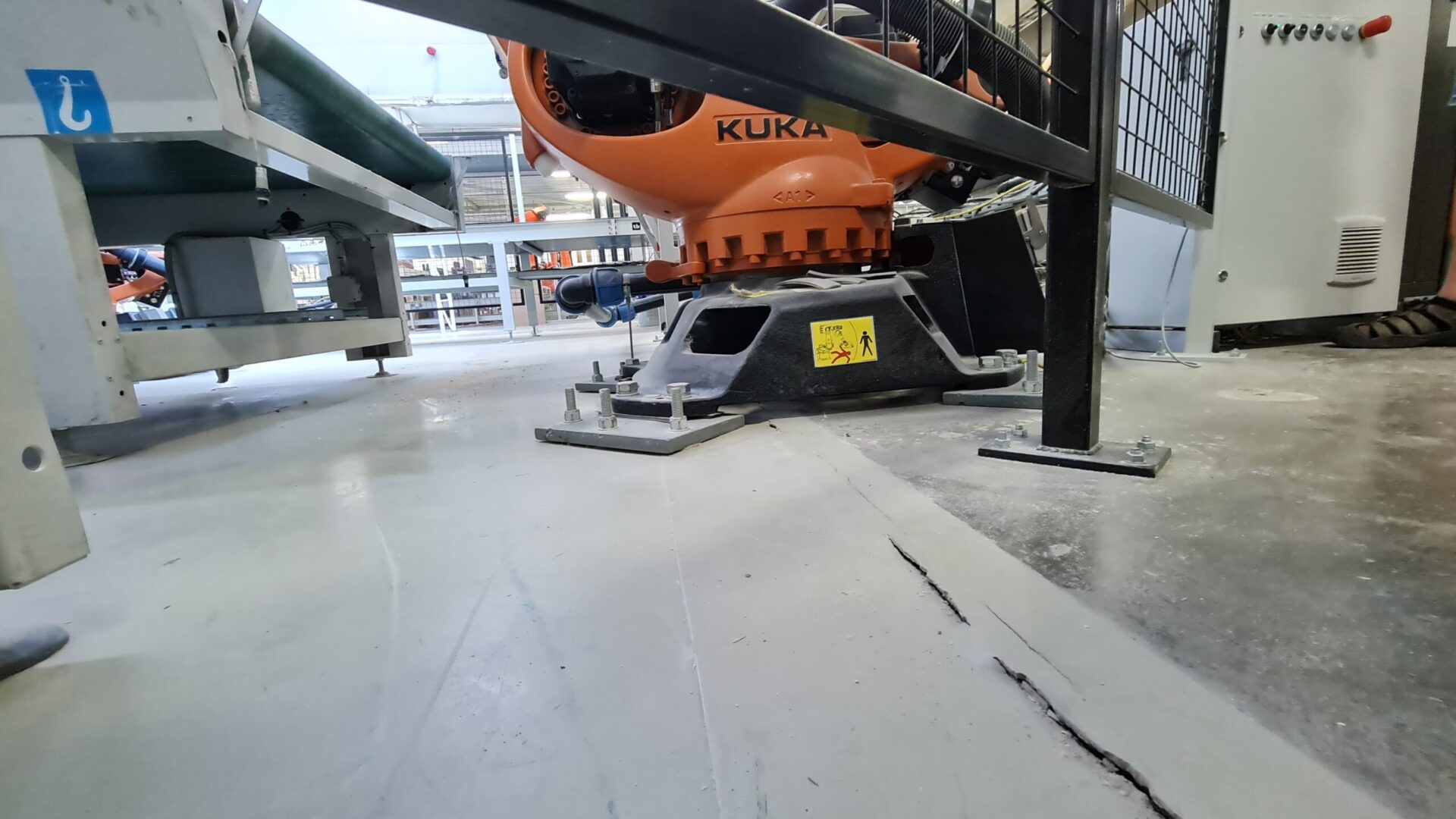
Why accuracy and vibration control matter in manufacturing
Manufacturing environments often depend on millimetre-level tolerances. Even small floor movements can affect equipment alignment, process accuracy and vibration behaviour.
- Misalignment of robotic systems and automated lines
- Increased wear or failure of precision equipment
- Calibration issues in laser cutting, measuring and assembly processes
- Amplified vibration affecting machines and personnel
- Higher health and safety risks
GEOLIFT solutions are engineered to restore bearing capacity, improve soil stiffness and support vibration control — not simply to lift the visible floor surface.

The GEOLIFT engineered solution
Technical investigation and root-cause analysis
- Site inspection, level surveys, structural assessment and soil behaviour evaluation help identify why the floor has moved. Where needed, the assessment can be supported by independent testing and research, including cooperation with VILNIUS TECH.
Engineered solution design
- The repair strategy, geopolymer properties and injection plan are selected based on load cases, vibration sensitivity and operational requirements.
Precision soil stabilisation and lifting
- Controlled injections are carried out beneath floors or foundations to densify weak ground, fill voids, improve bearing capacity and achieve controlled lifting where required — often while the facility remains operational.
Fast return to service
- Injected materials cure rapidly, allowing machinery and production areas to return to use with minimal downtime.
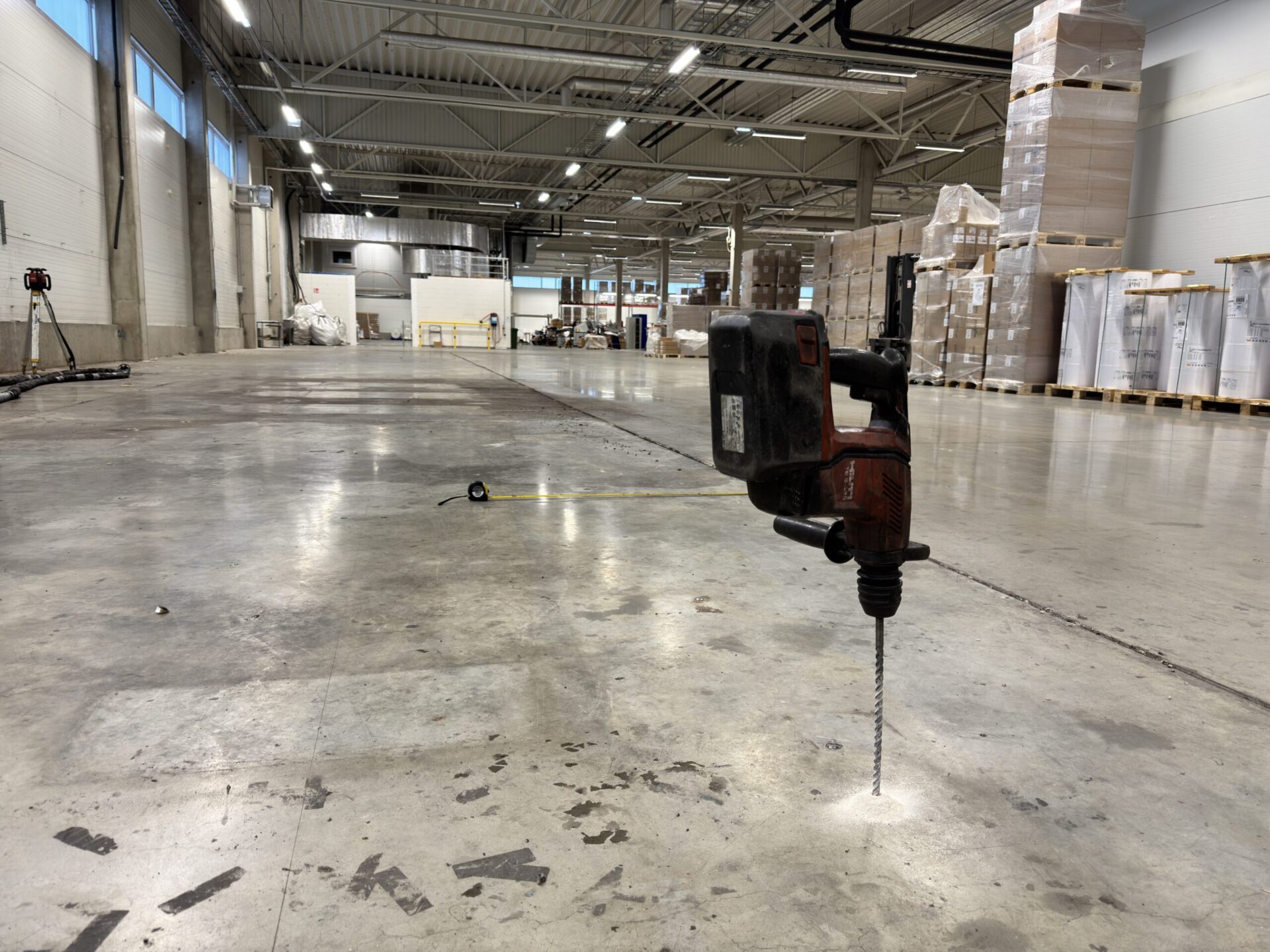
Key advantages for industrial and manufacturing facilities
- No major demolition or floor replacement
- Minimal interruption to production
- Precise lifting and ground stabilisation
- Improved soil stiffness and support beneath equipment
- Better control of settlement and vibration-related risks
- Long-term performance under heavy and dynamic loads
Process
Planned around production, safety and site conditions
Every industrial project starts with a technical assessment of floor movement, loads, vibration sensitivity and operational constraints. GEOLIFT then defines the injection strategy and carries out controlled stabilisation works with the goal of reducing disruption to production.
-
1
Technical assessment
We review visible damage, level differences, equipment loads, vibration risks and ground conditions. -
2
Solution design and estimate
We define the injection plan, expected outcome, work zones and project cost. -
3
Stabilisation and lifting works
Controlled geopolymer injections are carried out to strengthen the ground, restore support and improve floor performance.
Designed to minimise downtime and keep production moving.
Request an industrial floor stability assessment
"*" indicates required fields