
GEOLIFT provides engineered ground stabilisation and precision lifting for commercial buildings, public facilities and infrastructure assets affected by settlement, weak ground or voids. Using controlled geopolymer injection, we restore support beneath structures and pavements without excavation, demolition or major operational shutdowns.
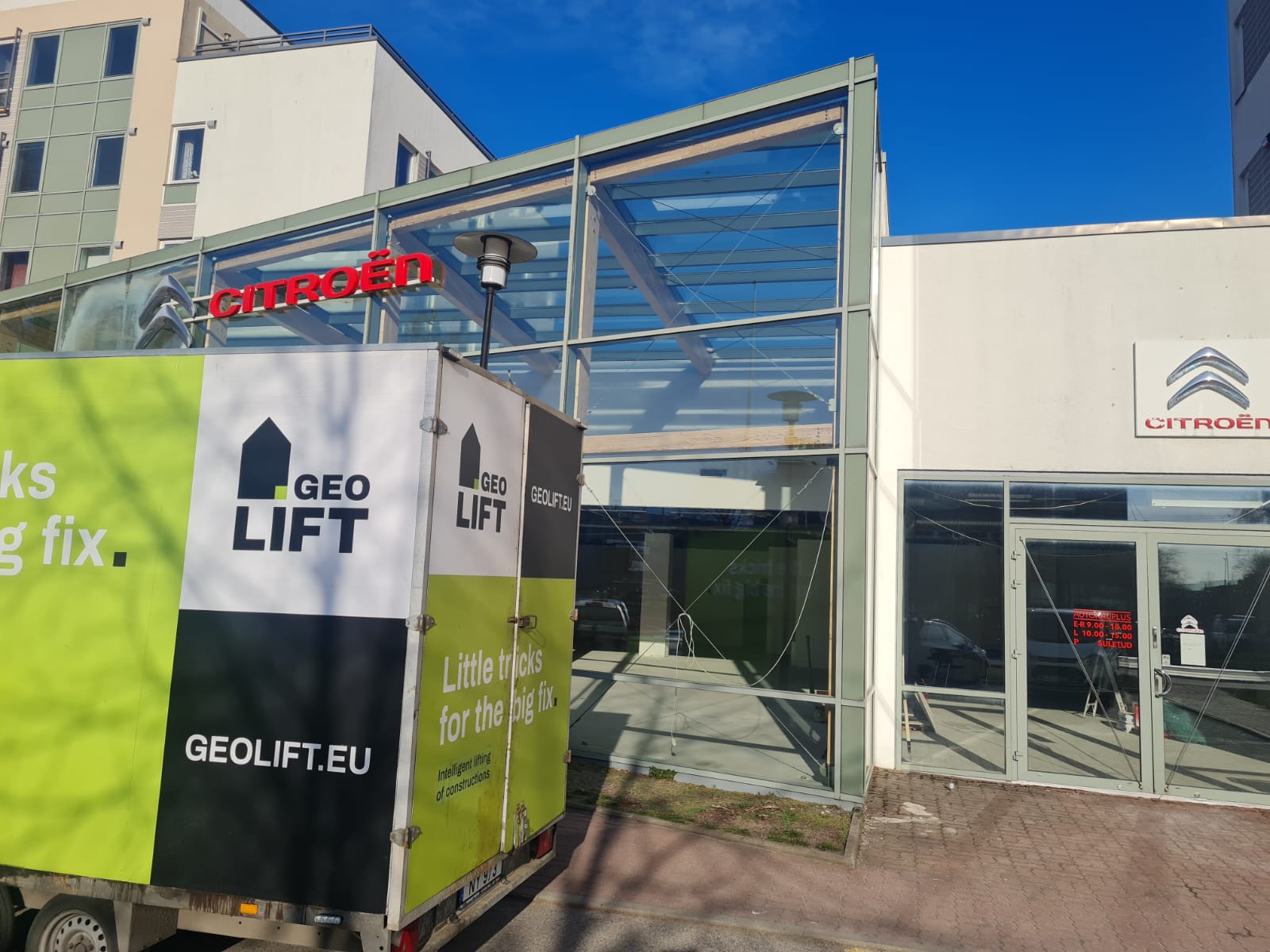
Applicable buildings and infrastructure assets
- Commercial buildings: warehouses, logistics centres, offices, retail and data facilities
- Public buildings: schools, hospitals, municipal and government facilities
- Transport infrastructure: roads, pavements, bridge approaches and rail assets
- Airports and ports: aprons, hardstands, loading areas and waterfront structures
- Other load-bearing structures exposed to settlement risk
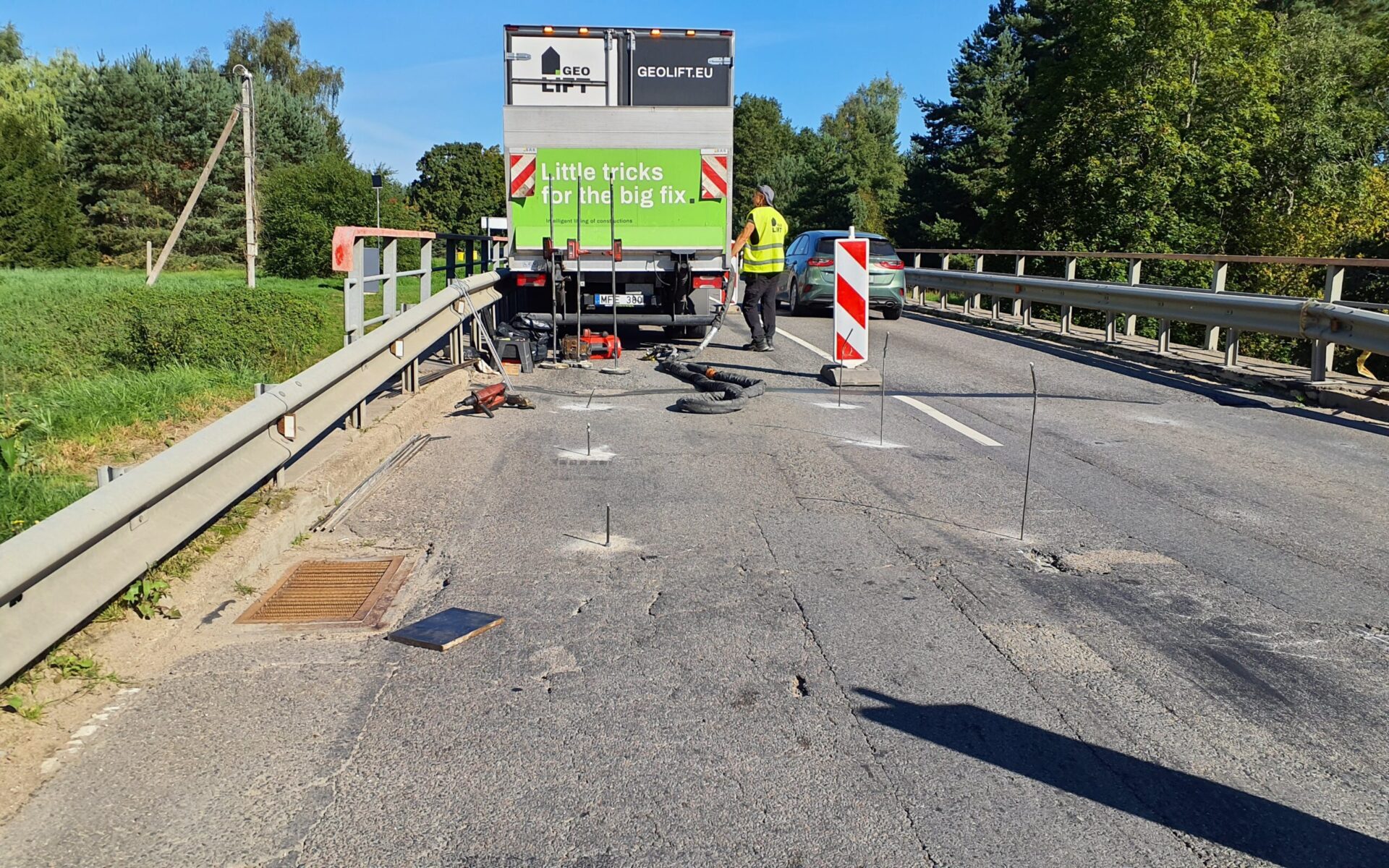
Common ground and foundation problems
- Poorly compacted or weakened ground beneath floors, pavements and load-bearing structures
- Compressible soil layers, such as peat, organic soils, soft clay or uncontrolled fill
- Soil erosion and washout caused by water ingress, drainage failures or leaking utilities
- Long-term consolidation under heavy static and dynamic loads
- Void formation beneath concrete structures and paved areas
- Differential settlement causing uneven surfaces, cracking and misalignment

GEOLIFT approach
Site survey and assessment
- GEOLIFT carries out an on-site inspection to review surface conditions, visible damage, operational loads and environmental factors. Where required, soil data and construction history are also analysed.
Engineering evaluation
- Engineers assess the failure mechanism, whether it is weak ground, loss of bearing capacity, void formation, erosion or consolidation. The goal is to address the cause of movement, not only the visible symptoms.
Tailored engineered solution
- Based on the findings, GEOLIFT defines the most suitable ground improvement or lifting strategy, including injection materials, pressures and sequencing for the specific structure and soil conditions. In infrastructure environments, special attention is given to traffic loads, vibration, access limitations and operational constraints.

Engineered solutions
- Void filling and ground improvement beneath floors, pavements and load-bearing structures
- Controlled lifting where level correction is required
- Soil densification and bearing capacity improvement
- Rapid curing for immediate or near-immediate return to service
- Injection planning adapted to access, loads and operational constraints
Independent laboratory and field research has confirmed that GEOLIFT-treated zones can achieve mechanical strength suitable for operational load conditions.
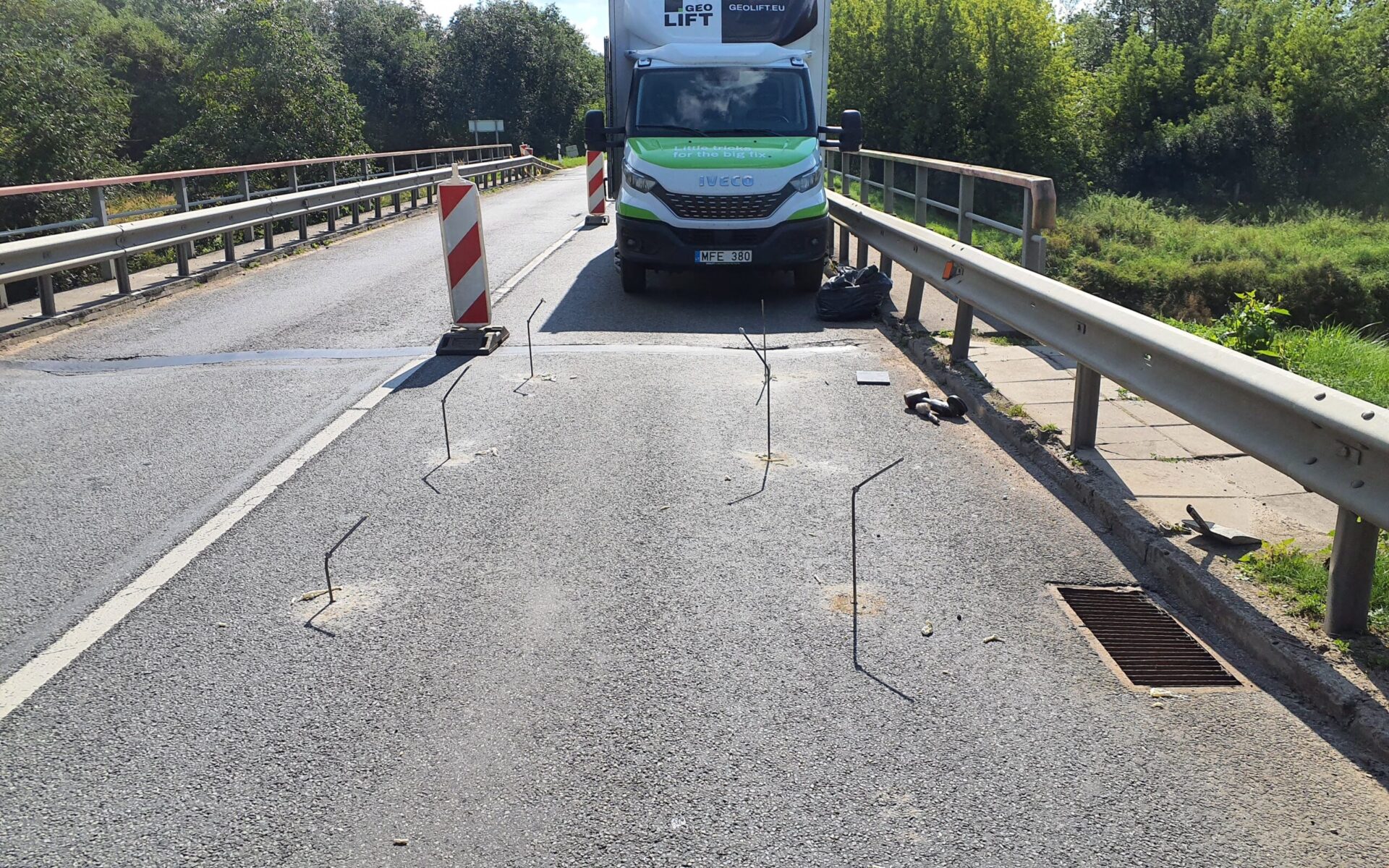
Durability in demanding operating conditions
Durability studies carried out with VILNIUS TECH show that GEOLIFT geopolymer materials:
- Resist exposure to gasoline, diesel, oils and de-icing salts
- Resist biological activity, including fungi and microorganisms
- Maintain mechanical performance under moisture and temperature variations
This makes GEOLIFT solutions suitable for roads, bridges, rail assets, ports and airport environments where long-term durability is critical and maintenance access may be limited.

Key benefits
- Minimal disruption to operations, users and occupants
- No major excavation, demolition or structural removal
- Fast execution with controlled outcomes
- Long-term stabilisation of weak ground
- Suitable for commercial, public and infrastructure environments
- Reduced environmental impact compared with traditional reconstruction
Process
Engineering-led from assessment to stabilisation
Every commercial and infrastructure project starts with a technical assessment of settlement, loading, access conditions and operational constraints. GEOLIFT then defines the injection strategy and carries out controlled geopolymer works to stabilise the ground, restore support and minimise disruption.
-
1
Technical assessment
We review visible damage, load conditions, soil information, access limitations and operational requirements. -
2
Stabilisation plan and estimate
We define the injection strategy, work zones, expected outcome, scope and cost. -
3
Ground stabilisation and lifting works
Controlled geopolymer injections are carried out to fill voids, strengthen weak ground and restore support.
Designed to minimise disruption in active commercial, public and infrastructure environments.
Request a technical assessment
"*" indicates required fields